

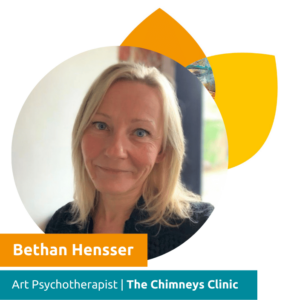
Art Psychotherapist Bethan Hensser is part of the team at the CQC-outstanding service The Chimneys. She explains how art therapy provides a non-verbal means of expression and can be incredibly helpful for people who find communicating their thoughts and feelings verbally challenging.
“The Chimneys Clinic supports women with a diagnosis of personality disorder or an emotionally unstable personality disorder (EUPD). It can also support women who are experiencing other mental health problems.
“As an Art Psychotherapist, I am part of a multi-disciplinary team of people who offer a range of therapeutic support.
“Art therapy is a form of psychotherapy. Art provides a non-verbal means of expression, so it can be really helpful for people who find it difficult to communicate their thoughts and feelings verbally or who may not understand those thoughts and feelings. It can feel less intrusive for people who have experienced trauma.
“We offer art therapy sessions both individually and in groups. In groups, we might explore mentalisation, which is the practice of imagining another’s mind. This can be difficult for people who have had a very disrupted early experience of mentalisation. By practicing the ability to observe and communicate the mental state of others, relationships and communication can be improved and maintained.
“Sometimes people who struggle with mentalisation will misinterpret facial expressions and picking up on body language and non-verbal and verbal cues. They will make assumptions about things that are untrue because they can’t imagine there would be another meaning.
“In the mentalisation group, we have a different theme each week. They create art together and imagine what it might be like to be in each other’s image and what feelings it might bring up.
“All of this helps people practice those skills, understand themselves better, improve their relational skills and understand verbal communications better. This helps people feel more able to have positive relationships with others.
“Individual work tends to be longer term, and how we approach it will depend on the person’s needs.
“My role as an art psychotherapist is different to art sessions with healthcare colleagues or occupational therapy sessions. At its core, it is about helping people understand themselves better.
“The artworks they create in individual art therapy sessions are considered an extension of the person. They’re treated with confidentiality and privacy, in the same way their notes would be and are stored carefully. Caring for the artwork outside of sessions is part of the therapeutic process. It demonstrates that they are thought about as people and held in mind between sessions.
“There are exceptions, however. For example, one person chooses to share her art, including those pieces she creates in art therapy. Being an outsider Artist is a huge part of her identity, and she does not differentiate between therapeutically created art and art created outside of therapy sessions. It’s not black and white.”
Elysium Healthcare is committed to providing highly specialised mental health services that are developed with the individual needs of each patient in mind. Find out more about Elysium’s mental health and wellbeing services here.