Laura Murphy is an experienced Senior Occupational Therapist (OT) specialising in neurobehavioural rehabilitation and stroke rehabilitation. Laura spent 15 months as Therapy Lead at Badby Park, an Elysium Healthcare service which specialises in rehabilitation and care for people with neurological illnesses, acquired brain injuries and spinal cord injuries. As Therapy Lead, one of Laura’s main tasks was to support the OTs at Badby Park and ensure that they had appropriate clinical supervision, supporting them to provide specialist care for individuals with complex needs.
In 2019 Laura made the decision to leave her role at Elysium, to work within an NHS community stroke team. Despite preparing to change roles, Laura remained steadfast in her belief that dedicated clinical supervision delivered by OTs for OTs is vitally important.
Laura wanted to continue to be involved in ensuring that all therapists, but in particular those working in a neurobehavioural rehabilitation setting, receive the specialist support and guidance that their roles require.
As Laura explains, her commitment to bridging the OT supervision gap saw her creating a new role for Elysium. In February 2019 Laura became Regional Clinical Supervisor and is responsible for organising and providing the clinical supervision of OTs.
Laura says: “I was also conscious of the limited supervision opportunities in neurobehavioural rehabilitation for OTs, as it’s a very specialist field of work. I believe that it’s really important for OTs to have dedicated clinical supervision, from other OTs who have the necessary clinical experience – to share best practice and provide appropriate support.
“I was fortunate enough to be able to discuss this with the senior management team in Elysium and was supported to create the Regional Clinical Supervisor job role. The main focus of the role was to continue to use my skills to support the OT’s they had in post, and as a plus, I could continue to practise my Neurobehavioural skills.”
The structure of the role was important, and Laura was keen to ensure that any support offered was compatible with the existing OT working patterns at Elysium.
Laura says: “To maximise the impact and effectiveness of my role I decided to work my weekly allocated hours (2.2 hours per week) all on one day of the month. We chose the last Thursday of each month to follow the existing OT supervision structure and provide the opportunity to bring clinical matters from the month to our meetings.
“One of the most beneficial things about clinical supervision is that you can discuss real-life scenarios, things that have actually happened and issues that are affecting patients – so it was important we chose the right time of month to do this.”
Laura’s role involved covering multi-sites across the midlands so logistics were an important consideration, as was the balance between virtual sessions and face-to-face meetings.
“The role originally offered 4 slots of 1 hour face-to-face supervision with the senior OT of each site allowing for travel time. The OT’s worked on three different sites and we planned to rotate sites for a meeting base. However, with Covid restrictions we had to move it to an online forum.
“When covid restrictions were lifted, we reflected that although the online forum was proving effective for reduction of travel time, the OTs felt they missed the peer supervision they were used to engaging in on site. Sometimes the virtual sessions, as convenient as they are, cannot fully replace in-person meetings.
“And I think that is quite a common conclusion across different professions, when you are in a meeting in person, the outcome is different, you can have more in-depth discussions, the conversation flows better. It is a more suitable environment, particularly for discussing personal elements of the role, perhaps where people need additional support and that type of thing.
“Therefore, Continuing Professional Development sessions were developed to run bi-monthly where therapists could join in person or remotely. All members felt that this was beneficial and it also allowed us to invite other OTs on the sites that were not being supervised by myself.”
As well as organising the appropriate timings and locations of the supervision, Laura ensured that the sessions were as official and appropriately structured as possible.
“There’s no official guidance or directions on how to run clinical supervision for OTs yet but I felt that it was very important to established a clear system from the outset. Not only will this help those individuals receiving the supervision now, but the more we record the more we can measure outcomes and similar in the future, to see if we are being as effective as possible.
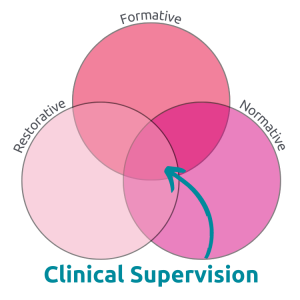
“All supervisees signed an agreed clinical supervision contract in line with CQC/HCPC requirements. I use Proctors (1992) Model of Supervision within my practise to allow me to ensure I cover all areas and also that the focus of supervision is correct for that particular supervisee, with regular checks if the direction of supervision was correct. This was established by using the below exercises that was adapted from Proctor’s (1992) Model of Supervision.
The response from those receiving supervision has been very positive and Laura is pleased with the benefits already visible amongst the OT team.
Laura says: “I’m confident that with this structure in place, the supervision has met the standards of HCPC and Elysium. It has also allowed supervision to focus on clinical matters and leadership opposed to being blurred with any performance/operational matters.
“The supervision is led by the supervisee and can be altered to their learning needs. The role allows the flexibility to join the supervisee to complete clinical/practical assessments together (outside of covid limitations). An anonymous questionnaire was completed at the 6 month mark of the role going live and demonstrated positive outcomes of the impact of the role.
“We have now expanded the CPD sessions to other OTS and professions within the wider service. This will expand the knowledge we have as a clinical team throughout, learn and appreciate the roles of others and the importance of us working cohesively toward a patient’s goal.
“I have also had the opportunity to support OTs outside of neurological services. This required a broader discussion re: the OT role, as opposed to giving neuro clinical advice, but again this demonstrates the flexibility of role and how it is able to offer support across fields.”
Laura has been in post two and half years now and the role continues to progress, with the first OT away day being a huge success and a community of OT professionals developing across Elysium’s sites.
“The first OT away day was a lovely opportunity for all OTs, seniors and more junior OTs to come together and share their clinical experiences and to learn from each other. We were able to reflect upon our experience of covid and we looked at the impact of new practices, plus we had a section on focused learning.
“The peer to peer support was one of the highlights for me. Just having other OTs to talk through things with and say ‘Have you tried this? Or how has this equipment worked for you?’ was invaluable.
“We’re starting to build a real community of OTs now and it is wonderful to see and be a part of. Moving forward, I feel replicating this role across professions would be a positive addition to the service.”