

A series of co-produced QI projects at Wellesley Hospital have brought together Elysium patients and experts by experience, along with clinical, therapeutic and nursing colleagues. The Quality Improvement projects at Wellesley’s Winsford Ward seek to examine how to adapt practices and res pond to inequities.
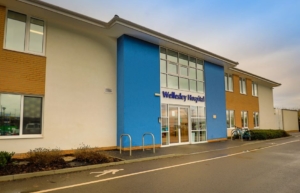
Sian Murphy, Principal Forensic Psychologist at Wellesley Hospital in Somerset, is one of the QI project team leads, alongside Dr Sarah Isherwood, Consultant Forensic Psychiatrist. They explained more about how the group from the ward, which supports people with learning disabilities, is working together to explore change.
“A national QI project was launched in July of last year. There is a recognition that there are inequities within mental health provision and that people with learning disabilities are part of the group who experience that inequity.
“Contextually also, there are the changes to the Mental Health Act and the impact those may have on the detention of people with learning disabilities. The principles of the changes to the Mental Health Act are of recognising those inequities and doing what we can to rebalance.
“At Winsford Ward, we have had a QI coach working with us to help us develop our ideas and how, as a ward, we might change or adapt our practices to make sure we are paying attention to and responding to inequities.
“Our QI group is made up of experts by experience (patients), our corporate expert by experience for the Southern region, Lois Edmunds and members of the nursing, speech and language, psychology and psychiatry teams.
“Meeting once a week, we thought about that if we were going to change things, what would we think about? What would matter most to the people we support? The topics we agreed were carers’ involvement, information sharing and how that is done, and noise reduction. And those became our three QI projects.”
Information sharing was the first to be addressed.
Sian said: “We developed a process and a form for the weekly ward ‘rounds’ or ICR (individual care review). These meetings can be quite intimidating, as there’s the multi-disciplinary team, the patient, nurses and external professionals all there.
“Lots of things get talked about and sometimes the person goes away without a clear understanding of what has been agreed. That is an inequity, as the ability to understand and retain information can be more difficult for some people.
“We now have a process and a form that is completed during ICR collaboratively. Before the meeting, the patient also has a meeting with their named nurse on what they want to talk about and this contributes to the content of the ICR. The form is printed out and provided to them, and they keep those summaries. It can make quite a difference and there are lots of benefits.
“The person has a clear record of what they wanted to talk about, and what was said. Sometimes a person might only hear a small part of the information that is shared during the meeting and focus on that. Having a clear overview that offers clarity for everyone on what was said and agreed is helpful.
“They have responsibility for having that information and they can use it in whatever way they need to. It’s a good reminder. It’s time-saving and it gives the power back to the person.
“We were able to work through a number of cycles of trying out the form and addressing issues with the process. We have fixed on the process and the form, and it’s nearly ready to roll out to others. We’re continuing to measure feedback as we go and anecdotally, so far, it has been well received and made a difference.”
Carers’ involvement is a project driven by the experts by experience. The team is currently working to gain insights from carers and patients on what carers’ involvement in care currently looks like, what it might look like and what that input could look like.
Carers have been invited to feedback via questionnaires and through CPA meetings. The group is also seeking to gather the same information and feedback from patients and staff, giving three sets of data to help shape the best and most effective methods for carers’ involvement.
The experts by experience are key in each project, with each being a dedicated lead for each of the three QI projects. Everything is done in a co-produced way, including developing the questionnaire.
Sian said: “Often people’s families have had difficult times with services – more so than other families – and can face different challenges such as geography, health, learning or accessibility. All of those can make contact and involvement more challenging. So a key part of this project will be to look at what would be ideal? What’s practical? What we know for sure is that a ‘one size fits all’ plan won’t be the answer.
“So we are spending a lot of time looking at the best way to gather useful information before we jump to making changes.”
The final of the three QI projects centres on reducing noise on wards.
Sian said: “Noise reduction is often at the forefront of patients’ minds when they arrive for the QI meetings. They have come from busy wards and mornings are busy.
“We tried to explore when the peak noisy times might be, but that is difficult for our group to cover. It’s difficult to reflect back and remember the times through the day that noise was higher.
“What we were able to track was the kind of noise that is problematic, and how that can vary from one person to another. For some, hoovering at night is not a problem, but it is for others.
“Some of the main ‘offenders’ were slamming doors or doors not being closed quietly at night. Alarms can also be an issue.
“It helped us paint a picture of what are the ‘green’, ‘amber’ and ‘red’ noises. One outcome is we are going to be producing a poster for the ward with just some of the ‘please think about noise’ and some of the issues: ‘if you don’t need to talk outside people’s rooms, please don’t’.
“There are of course things we have to work through, practical things. Have we got agreement to put up posters, for example? What we have to do through QI is present the issue and present the data, be clear about what we’ve concluded and think across the hospital how we might implement the changes.
“There may be something that makes a significant difference for one person. There might be things people have not thought about. And it may be that some projects are things on which we can have cross-ward agreement with the learning applied throughout.”
Four of the ward’s current patients are part of the QI team and join the hour-long weekly meeting.
Sian said: “The EbE members – their focus, work and the insights they have brought – have been invaluable for each of these projects and really influenced how each has been approached. This is not tokenistic – the whole group is the whole group. We work out who is going to take on different tasks, fitting into their skills and abilities, and everyone contributes in a positive way.
“We had feedback from external coaches who said these projects were engaging experts by experience in a way that is genuine and real. We have seen firsthand just how important it is to approach QI projects like these properly, and in a properly co-produced way.”