Curriculum & Planning

Our curriculum is mainly based on the areas of study suggested by each young person’s home school. This is so that continuity is maintained and young people continue to progress within their usual setting.

Where this is not possible or appropriate, Brighton & Hove Clinic School has developed its own holistic curriculum to ensure it meets the need of each young person.

Curriculum Goals

The school provides a broad and balanced curriculum for young people with a diverse range of educational needs. We offer classroom environments in which debate and discussion can thrive, free of political bias. Any viewpoint, including that of the teacher or other adults, can be the subject of healthy challenge.

The goals of the curriculum offered are:
Specialist Education & Learning Opportunities

While the school is not legally obliged to follow the National Curriculum, we adhere to it, wherever appropriate for individual students and the group as a whole. We recognise the importance of keeping abreast of curriculum development and opportunities that we develop and exploit to promote and extend young people’s learning.

We recognise the importance of social, moral, spiritual and cultural (SMSC) development and highlight opportunities within each curriculum subject offered to address, explore and teach these aspects and values accordingly. Prominent in each of our classrooms are our own values, agreed and developed with young people, which set out the expectations for behaviour and conduct in the classroom.

We firmly believe and are committed to teaching of values which promote cohesiveness within our school and community. We believe that these values which traditionally underpin British society should permeate all aspects of school life and be upheld by every member of the school and wider community. We promote these values through our own school values, curriculum delivery, and the school offer and enrichment activities.

Personalised Approach

Our small classes assist in the provision of a personalised curriculum. A wealth of information is gathered at point of admission both through formal and informal assessment in conjunction with baseline measurements over this period. This is used to create an overall picture of a young person’s strengths and weaknesses to address any gaps in learning and as a starting point to measure progress across the length of the hospital admission.

For some lessons, i.e. Drama or PHSE, we teach in larger groups to make the learning more effective and develop positive peer interactions.

Realising the Curriculum

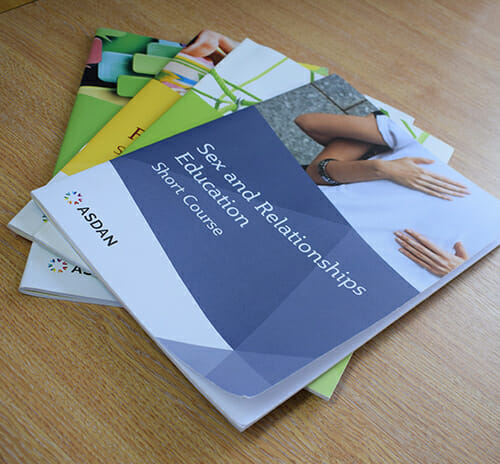
We currently teach English, Maths, Science and PSHE as core subjects. In addition, a broad range of other National Curriculum subjects and enrichment learning are offered to address a wide range of individual needs and interests, including those who require post 16 provision. We also have access to e-learning provision to offer bespoke subjects in a variety of areas. If appropriate, young people can have their achievements accredited through award schemes and Functional English and Maths qualifications.

Education, Health and Care Plan (EHCP)

An EHCP is a legal document that describes a child or young person’s special educational, health and care needs.  It explains the extra help that will be given to meet those needs and how that help will support the child or young person to achieve what they want to in life.

An EHCP supports a young person all the way until the age of 25. We have dedicated member of staff who, if a young person does not have an EHCP, will put an application in place with the young person’s local authority for the young person, in consultation with the young person’s psychiatrist, and the parents/carers. An EHCP that is already in place will have an annual review completed by our team, and the meeting organised with relevant professionals – both in the community and within the hospital.

English as an additional language (EAL)

We are committed to provide equal opportunities for all of our young people and accordingly, we ensure that young people are not disadvantaged by language differences. Further advice from the home school or young person’s LA will be sought and specific support provided so any young person with English as an additional language will have the same access and opportunities as those for whom English is the primary language.

Careers guidance

We provide a highly personalised programme of careers guidance delivered by impartial advisors and industry specialists who visit the school regularly throughout the year.

The school also offers careers education through our PHSE and Life Skills curriculum, and young people also have the opportunity to discuss careers pathways and interests on an individual basis through key work sessions.

We work closely with parents to organise visits to open days and careers events so that young people are able to make informed choices about their future.

Transition support towards life outside/beyond the hospital school

Young people often express their concern about leaving hospital and what lines ahead in their future, particularly in education. 

At the hospital school, we are skilled in managing learning-related anxieties and supporting the transition back to an education environment. Our school reintegration model addresses and facilitates successful transition with the aim of preventing further hospital admissions.

Sometimes it is not possible for a young person to return to their previous education provider e.g. a school leave who doesn’t have sixth form provision. With the assistance of the home LA we are fully involved in supporting the transition to an identified new provider of education.

Many of our young people aspire to attend university and our staff are very experienced in supporting the UCAS application process, including applications to Oxbridge and other Russell group universities.

Exam & Assessment Results

As a registered examination centre, young people can sit their GSCE and A-level exams whilst on roll with us. These examinations are conducted in accordance with JCQ guidelines and are usually done through a transferred candidate arrangement with the young person’s home school or college. We are also able to enter young people as independent candidates if they are not dual registered at another educational establishment.