Today is International Day of Zero Tolerance for Female Mutilation.
Saadye Ali is a Practice Nurse at Elysium’s Chadwick Lodge and also a Senior Lecturer in Adult Nursing. Saadye has a PHD which explored the subject of FGM (female genital mutilation), looking specifically at its prevention.
She has had two papers published including one in which she worked with young people on what they perceived or knew about the subject, beliefs and values around the issues, how did they learn about it as well as how they would like to learn about it. The paper explored how best to improve health promotion messages in schools and how can we empower parents to talk about the issue at home.
Saadye also used to work training nurses and doctors and social workers on FGM and campaigns around the issues.
FGM is a topic that is rarely discussed in nurse training but it is an important one for all of us to be aware of in our work, and personally. It is relevant for Elysium’s client group and everyone needs to be aware so people can be supported to have the best quality of life.
Here Saadye tells us more about this important subject.
“When we talk about FG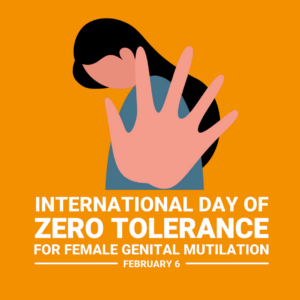 M, some people don’t know what it is. They may have heard it referred to as female circumcision, but maybe don’t know much more about it. Some people don’t know it’s illegal in the UK.
“While I think awareness across the board in healthcare is getting better, when I trained as a nurse I had no idea what FGM was. No one told me anything about it during my training. As part of my work, I teach healthcare professionals and social workers about FGM.
“FGM is covered in mental health nursing safeguarding training, but it is just one part of that training along with many other different topics. And it can be a sensitive subject, and a lot of people, even if they are survivors of FGM, may not want to talk about it.
“But raising awareness and knowing how we can seek support is essential. We need to create an environment where people are comfortable talking about it so the right support can be offered to people affected.
“When thinking about colleagues, it’s important to know whether they are aware that we have a mandatory duty to report and record if we become aware of someone under the age of 18 having been subjected to FGM.
“Mandatory reporting states that if you have seen, or if have been told by a person that they have had FGM, under 18 yrs, it must be reported directly to 101. We must also record it for those over 18yrs, so we know who is affected.
“We should think about how we can best support a person – whether that be a patient or a person we know. How we can support them may be different depending on whether or not they are under 18, if they are a patient or if they are a person we know such as a colleague or friend.
“Where a person is under 18, we have a mandatory duty to report and record. Through the safeguarding lead at the service as well as 101, the young person’s GP should be made aware and they can make a referral to a specialist support service.
“If a person is an adult in our care, then we must record that information and again, through the safeguarding lead. If the person wishes, we can support them to make a referral through the GP, who again can refer a person to a specialist clinic for further support.
“If a person is not supported by us and is over 18, they can self-refer to one of these clinics, such as the Rose Clinic, in Oxford and Bristol which offers counselling for those who have undergone FGM.
“There are organisations which work with women from FGM practising affected communities. Forward UK is one of those and they are great at supporting women. I also work with Refugee Women of Bristol and they are amazing women who work on this agenda along with supporting refugee women of Bristol.
“I am part of a campaign which is looking at introducing reconstructive surgery for women in the UK, specifically campaigning for reconstructive supportive on the NHS. At the moment it is not offered. Women have to go private or go abroad for reconstructive support currently.
“In Elysium’s services, many of the people we support have additional needs and may be neurodiverse, for example. Some may not be confident talking to staff about FGM. I recommend having a poster in the nurses’ consultation room, that can help start the conversation and let the person know that you’re aware of FGM. It raises awareness for staff too. We should never make assumptions and pigeonhole people in our thoughts about who is most likely to be affected. Our conversation should be universal.
“We need to make sure that we’re ready to have that conversation when it is needed and not to be afraid of it. And knowing how we can support a person after that conversation begins is also key. We need to get it right for them.
“Forward UK is a good place to start, the National FGM Centre has many resources as does the Home Office.”