September 10th is Suicide Prevention Day, an event which seeks to bring organisations and communities across the world together to raise awareness about suicide prevention.
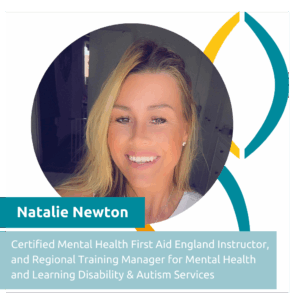
Protecting and enhancing mental health is a priority at Elysium, both for the people we support in our services and for our colleagues. As part of supporting the mental health and well-being of our team, we have a team of trained Mental Health First Aiders across the organisation. We spoke with Natalie Newton, Certified Mental Health First Aid England Instructor, and Regional Training Manager for Mental Health and Learning Disability & Autism Services, to find out more about ‘what is mental health first aid’?
“I was interested in becoming involved in mental health aid for many reasons. We have physical first aid in case a person becomes unwell or injured, providing initial help and support before they receive the medical attention they may need.
“Mental health first aid applies in the same way. It sees Mental Health First Aiders giving support in the first instance. We’re not counsellors, clinicians or therapists, but we’re trained to recognise the signs that someone may be experiencing poor mental health and offer support. Or, should someone ask for support, we can help them access it.
“It can be as simple as asking if someone is okay, or we might use the resources we have to refer them to other support or encourage them to seek that help. Sometimes, you might need to seek immediate professional help for the person.
“What’s also important is looking after your own well-being. We can’t help others if we’re not looking after ourselves.
“Mental health first aid can take different forms. We have the Hub of Hope, which helps us access hundreds of support services for people to offer various kinds of support and advice; financial, different diagnoses, or for LGBTQIQ+ communities, for example. There is a huge wealth of support out there, and we can help signpost people to the things that are right for them.
“It can be filtered to be really tailored and specific for that person. We can help people access one-to-one support, group support, and age-specific support. Some people prefer text, some people face-to-face or telephone. We help people access the support they need in a way that meets their needs.
“All support we offer is confidential, and if anyone needs to speak with their mental health first aider, they can find their details in staff areas within their offices or service. Or they can contact me directly, and I will put them in touch.”